

Most people associate structural pest damage with termites. But carpenter ants can also be a serious threat. Termites consume wood as a food source, but carpenter ants excavate wood to build their nests. This can lead to compromised structural integrity and huge repair bills.
The problem with carpenter ants is that their work happens inside walls, beneath floors, and within wood structures. The colony may have been at work for months by the time most homeowners notice a problem. Thankfully, routine residential pest control in Indianapolis, IN can help spot a carpenter ant issue and address its source. Experts at Pointe Pest Control can identify signs of activity and know where the ants can be found. Here are signs that carpenter ants may be at work in your Indianapolis, IN property:
You Spot Large Black Ants Inside Your Home
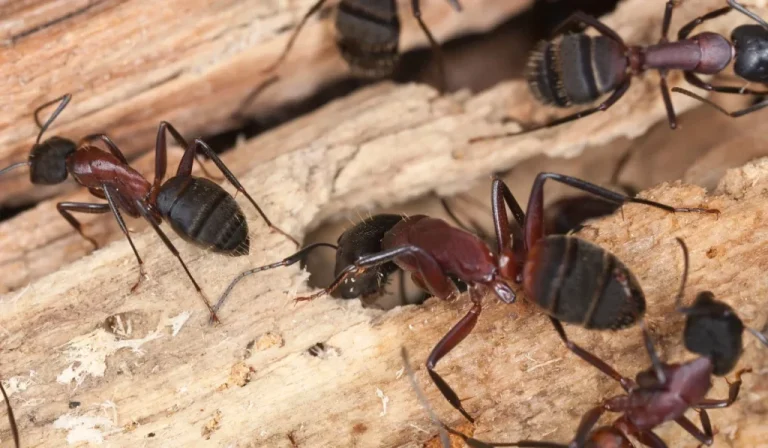
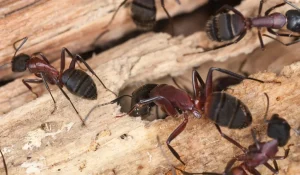
Carpenter ants typically measure between a quarter-inch and a half-inch in length. They are most commonly black, though some species have reddish or yellowish coloring on parts of their body.
Most ant species you would encounter indoors are much smaller. A large ant found inside during cold months is particularly concerning because it could mean an established colony exists within the structure itself. A mature carpenter ant colony can contain several thousand workers.
Frass Accumulation Near Wood Surfaces
Carpenter ants push out the wood they excavate. The material they discard, known as frass, is a mixture of wood shavings, soil particles, and insect body parts that accumulates in small piles near nest openings.
Carpenter ant frass is often compared in appearance to pencil shavings. It’s different from termite frass, which has a more uniform, pellet-like consistency. Common locations to find frass include along baseboards or at the base of door frames and beneath window sills, especially in older wood frames. Frass can also be found near structural beams in basements, crawl spaces, or attics, or on surfaces below wall voids where nest galleries have been carved.
Faint Rustling Sounds Inside Walls
Carpenter ant colonies are active, and large colonies produce sounds that can be heard through walls and wood structures. Homeowners often describe the sound as a faint crinkling or rustling noise similar to the sound of someone crumpling paper or cellophane at a distance.
These sounds are most noticeable at night. The noise comes from worker ants moving through galleries and excavating wood within the structure.
Moisture-Damaged or Softened Wood
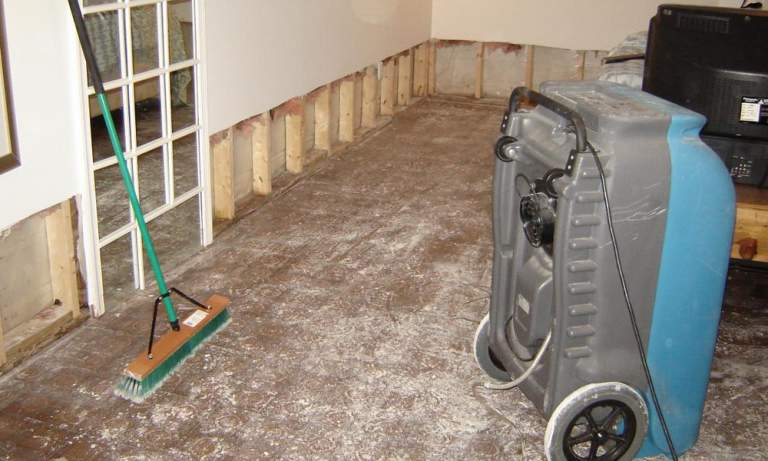
Carpenter ants are attracted to wood that has been softened by moisture damage, decay, or previous pest activity. Wood in this condition is easier to excavate and provides the humid microenvironment the colony needs to thrive. Common moisture-compromised wood locations in Indianapolis, IN homes include:
Wood framing around windows and doors. This is where rain infiltration occurs.
Roof eaves and fascia boards. These are exposed to seasonal moisture.
Basement and crawl space beams. These have increased exposure to humidity.
Wood near leaky pipes. These can be found under sinks or around water heaters.
Deck and porch framing. This must be in contact with soil or pooled water.
Structural Wood That Appears Smooth and Tunneled
The affected wood has a distinctive appearance when carpenter ant damage reaches a visible stage. Carpenter ant galleries are clean, smooth, and almost polished on the interior surfaces. The tunnels follow the grain of the wood and branch out in organized patterns. If you have access to exposed wood in your basement, crawl space, attic, or garage, conduct a visual check for smooth, clean-edged tunnels running through beams or joists. Also, look for wood that crumbles or breaks apart more easily than expected and irregular channels carved along the wood grain.
Any wood that shows these characteristics should be assessed by a pest control professional immediately. Carpenter ant galleries weaken the load-bearing capacity of structural wood, and the damage does not reverse itself once the colony is removed. For complete protection, consider working with Pointe Pest or scheduling regular inspections with Pointe Pest Control to prevent long-term structural issues.