
The Assumption Behind a Simple Coat of Paint
Most property managers assume that painting lines on asphalt is a one-and-done task, something you schedule once when a lot is paved and then forget about for years. The thinking goes that paint is paint, and a few gallons of yellow or white will hold up as long as the pavement underneath it does. That assumption shows up in budgets too, where striping gets lumped into a minor maintenance line item rather than treated as its own recurring cost.
In reality, striping degrades on a timeline that has almost nothing to do with the asphalt itself. Sun exposure, tire friction, snowplow blades, and even the type of sealant used on the lot all chip away at paint far faster than most owners expect. A lot that looks freshly striped in June can show significant fading by the following spring, especially in regions with harsh winters or intense summer UV exposure. The gap between what people expect and what actually happens is where a lot of poor planning decisions get made.
What Repeated Fading Patterns Actually Tell Us
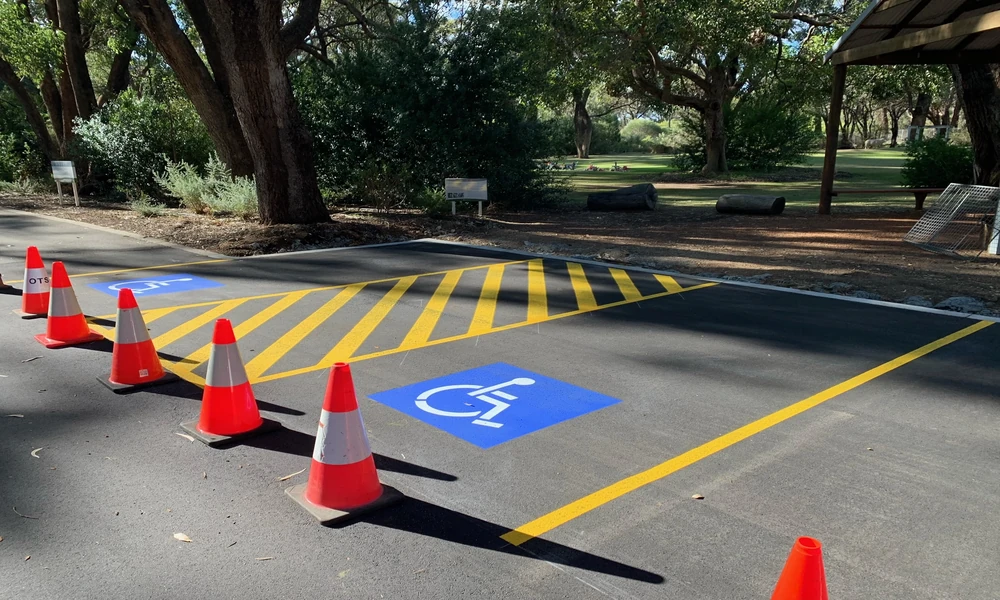
Anyone who has walked dozens of commercial lots over a few seasons starts noticing the same failure points again and again. Lines near entrances fade first because that’s where braking and turning stress concentrates. ADA-compliant stalls near building doors wear out faster than overflow spaces at the back of the lot, simply because of traffic volume. These patterns aren’t random, and they tell a consistent story about where paint budgets should actually be spent instead of spread evenly across a property. Working with an asphalt striping contractor who tracks these wear patterns across multiple properties tends to produce striping plans that hold up longer, because the layout accounts for where stress actually occurs rather than treating every stall as equal.
The material choice matters just as much as the layout. Standard traffic paint looks fine on day one, but in lots with heavy turnover, it starts showing wear within months. Thermoplastic and epoxy-based alternatives cost more upfront but hold their color and edge definition far longer under the same conditions. Crews who stripe lots for a living see this difference constantly, which is why many push clients toward the higher-cost option even when the initial quote raises eyebrows. The pattern holds across climates too; a lot in a dry, sunny region and a lot that deals with heavy snow both lose striping quality faster than expected, just for different reasons. Once you’ve seen the same fade lines appear on property after property, it stops looking like bad luck and starts looking like a predictable cost of doing business.
Building a Striping Schedule That Matches Real Wear, Not Guesswork
Translating these patterns into a workable maintenance plan starts with walking the lot and noting where paint has actually failed, not just checking a calendar. A property with heavy daily traffic near a loading dock needs touch-ups far sooner than a satellite parking area used twice a month. Building a striping schedule around actual wear rather than a fixed annual date saves money over time, because it avoids repainting sections that still look fine while catching problem areas before they become safety or compliance issues.
Budgeting for striping also means accounting for the layout changes that come with evolving use. A retail lot that adds curbside pickup spots or a warehouse that shifts its loading pattern needs new lines, not just refreshed old ones, and that kind of change is easiest to plan during a scheduled repaint rather than as an emergency fix. Coordinating these updates with seal coating cycles makes sense too, since fresh sealant provides a cleaner surface for paint to bond to and extends the life of both treatments. Lots that stagger these jobs without planning tend to waste material because paint goes down on a surface that’s about to be resealed anyway.
None of this requires elaborate software or constant inspections. A simple walkthrough twice a year, paired with notes on which areas show wear first, gives most property managers enough information to plan striping intelligently instead of reactively. Pairing that observation with a contractor who understands regional wear patterns, snowplow damage, and local paint regulations turns striping from a recurring annoyance into a predictable, manageable part of property upkeep. Over several years, that shift in approach tends to save more money than any single cheap repaint ever could.