

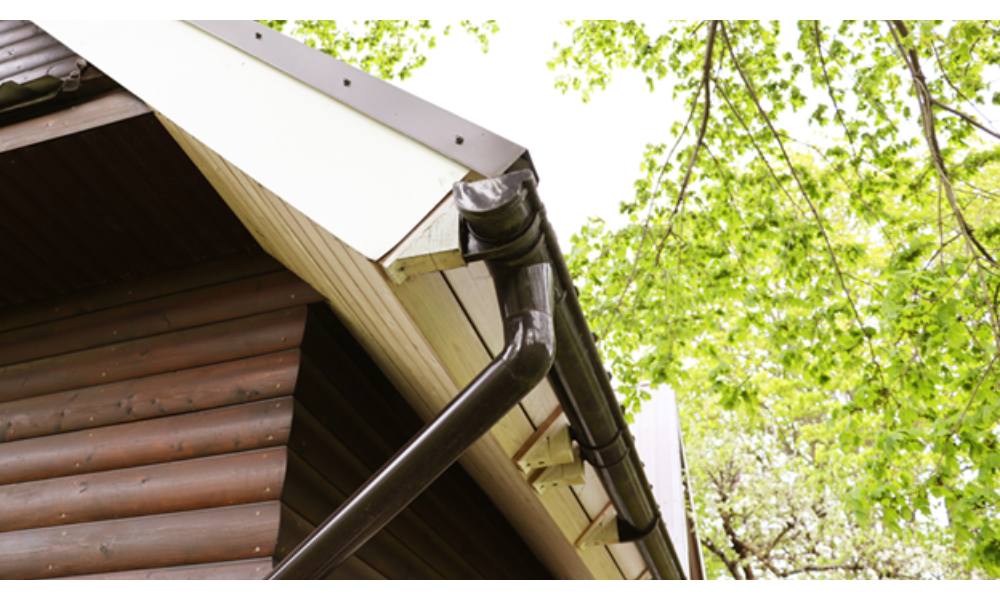
When heavy rain hits, your gutters may be doing their job well, but if the downspouts send water blasting straight into your flower beds, mulch, or lawn, your landscaping still pays the price. Washed-out mulch, exposed roots, and muddy channels are all signs that rainwater isn’t being managed the way it should be.
The good news: with a few smart downspout ideas, you can protect your landscaping from washouts and erosion while keeping things looking neat and intentional.
Here are some practical options to consider.
1. Add Downspout Extensions to Move Water Farther Away
One of the simplest ways to protect your landscaping is to extend where the water lands. Many downspouts stop just a foot or two from the foundation to right where your beds, shrubs, or decorative rock are.
By adding rigid or flexible extensions, you can carry water several feet away from the house before it’s released. Aim to direct the flow:
- Past your flower beds and shrubs
- Beyond your mulch line
- Toward a safe drainage zone or slope
This small change can drastically reduce the amount of water that’s pounding your plants and soil during storms.
2. Use Splash Blocks to Diffuse the Flow
If you’re not ready for full underground drainage, splash blocks are a simple, budget-friendly option. These concrete or plastic trays sit right under the downspout and help:
- Spread water over a wider area
- Slow the speed of the flow
- Prevent immediate soil displacement
Position the splash block so it slopes away from your landscaping and foundation. This keeps water moving in the right direction and away from vulnerable root zones and walkways.
3. Install a Rock or River Stone Dry Creek Bed
A “dry creek bed” made from river rock or decorative stone can turn a problem area into a landscape feature. Run it directly under your downspout or connect it to a buried drain line so it can carry water away during storms.
Benefits include:
- Controlling where water flows
- Reducing erosion along slopes
- Adding visual interest to the yard
Make sure the bed is slightly recessed and lined with landscape fabric to minimize weed growth. The stones help slow water down and keep it from carving out random channels through your lawn or beds.
4. Bury Downspout Lines to a Pop-Up Emitter
If you’re tired of seeing extensions and hoses running across your yard, consider burying the drainage line. A common solution is to run PVC or corrugated pipe underground from the downspout to a “pop-up emitter” farther out in the yard.
During heavy rain, water travels underground and pops up at a safe distance to disperse over the grass or into a drainage swale. This setup:
- Keeps your beds and mulched areas protected
- Reduces tripping hazards from surface extensions
- Maintains a cleaner, more polished look
This strategy is especially helpful on smaller lots where you need the water to travel beyond your main landscaping zones.
5. Create Rain Gardens in Strategic Low Spots
If you have a natural low area where water tends to collect, turning it into a rain garden can be both functional and beautiful. A rain garden is a shallow, planted depression designed to temporarily hold and absorb runoff from downspouts and hard surfaces.
Use deep-rooted native plants that can tolerate occasional flooding and dry periods. This approach:
- Slows down runoff
- Reduces erosion
- Filters water before it soaks into the ground
Direct your downspout or buried drain line toward the rain garden instead of letting the water hammer your beds or lawn.
6. Reinforce Vulnerable Areas With Stone or Groundcover
Some spots are simply more prone to erosion: the base of slopes, corners where water converges, or edges of mulch beds near downspouts. In these areas, consider reinforcing the soil with:
- River rock or decorative gravel
- Stepping stones or pavers
- Dense groundcovers with strong root systems
These materials help anchor the soil and absorb some of the energy from flowing water. Combined with proper downspout direction, they can dramatically cut down on washouts.
7. Redirect Downspouts Away From Delicate Beds
Sometimes the easiest fix is a change in the water flow direction. If a downspout currently empties directly into a high-value bed, like a foundation planting with shrubs, annuals, and mulch, consider re-routing it.
Options could include:
- Turning the elbow and its extension toward a lawn or a rock area
- Tying that downspout into a different drainage line
- Moving the downspout location entirely during a gutter upgrade
The goal is to send water somewhere that can handle it, such as grass, stone, or a rain garden, rather than your most carefully curated landscape beds.
8. Plan a Whole-Home Downspout Strategy
Instead of treating each trouble spot as a one-off problem, step back and look at your entire property. Ask yourself:
- Where does each downspout discharge now?
- Are some areas taking the brunt of multiple downspouts?
- Do you have slopes, retaining walls, or walkways that need extra protection?
A whole-home drainage plan might include a mix of buried lines, extensions, rock beds, and rain gardens. When everything works together, your landscaping stays intact, your foundation is better protected, and your yard looks more intentional.
If you’d rather not puzzle out the details on your own, it can be helpful to get expert input. Many homeowners choose to work with downspout installation services Carmel residents rely on to design a system that respects both water flow and landscaping. With the right downspout solutions in place, you can enjoy lush beds, tidy mulch, and stable soil even after the heaviest storms.