
Central Oklahoma sits in one of the busiest hail corridors in the country, and most homeowners here can name the storm that took their last roof. What fewer people notice is how often the replacement that follows is a near copy of the roof that just failed. Same nails, same open seams between deck panels, same shingles, all waiting for the next spring to repeat the story.
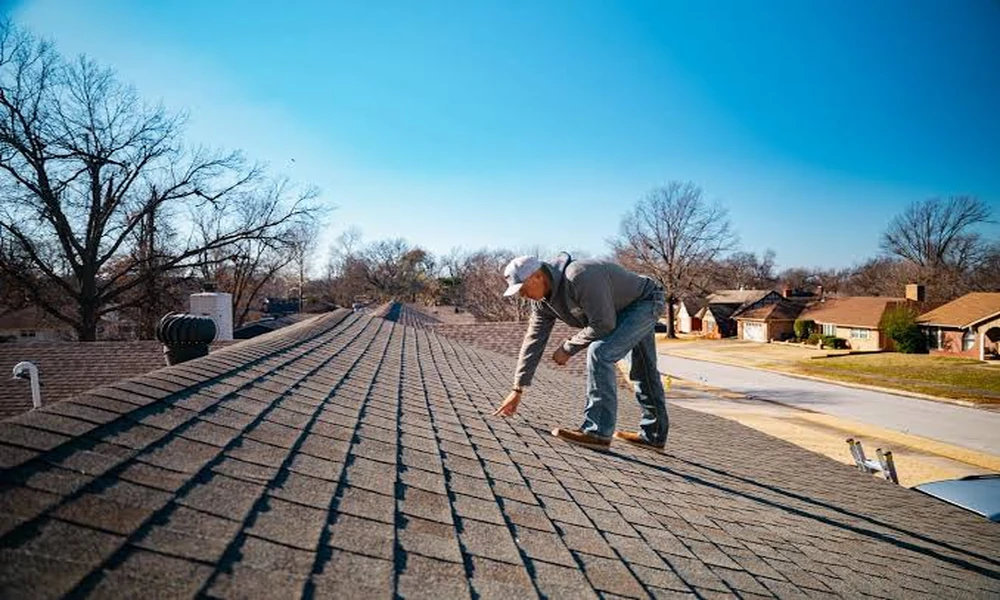
That cycle is why some roofers in the metro now bring up upgrades while they are writing the estimate instead of after the next round of damage. E Antlers Construction is a family owned roofing, siding and gutter contractor based in southwest Oklahoma City, answering calls around the clock for homes in Edmond, Norman, Moore, Yukon and Midwest City. Its founder first climbed onto a roof at fifteen, and that kind of history tends to make a crew wary of rebuilding the same weak point twice.
The Copy Problem Nobody Mentions at the Estimate
A standard insurance claim exists to put back what was there before. If the old roof was a basic shingle nailed to plain sheathing, the payout generally covers a basic shingle nailed to plain sheathing.
The costs of repeating that design build slowly. Many Oklahoma policies now carry wind and hail deductibles calculated as a percentage of the home’s insured value rather than a flat amount, so each claim can mean a few thousand dollars out of pocket. Some carriers also add cosmetic damage exclusions, which means dents that leave a roof ugly but still watertight may not be paid at all. Over a few storm seasons, that adds up to real money spent keeping an ordinary roof ordinary.
Where the Real Upgrade Hides
The best known framework for this work is the FORTIFIED Roof standard written by the Insurance Institute for Business and Home Safety, and Oklahoma homes usually aim for its High Wind designation with the optional Hail Supplement.
The first change happens at the deck. Instead of smooth nails, the sheathing gets fastened with 8d ring shank nails spaced about six inches apart for the High Wind level. IBHS testing shows the raised rings can roughly double how much uplift the deck resists.
The second change is a sealed deck. When wind strips shingles off, the gaps between plywood or OSB panels become open channels for rain. The standard accepts three ways to close them.
- Two full layers of #30 felt across the deck.
- Four inch wide flashing tape over every panel seam, followed by one layer of felt or synthetic underlayment.
- A fully adhered membrane covered with a layer of #15 felt.
Whichever method is used, far less water reaches the attic and ceilings if the roof covering tears away mid storm.
The third change sits at the edges, where wind usually starts peeling a roof apart. A metal drip edge of at least 26 gauge is installed over the underlayment and extends a minimum of two inches onto the deck, paired with a starter strip that is fully adhered rather than simply tacked in place.
Class 4 Is the Floor, Not the Ceiling
Shoppers in Oklahoma hear “Class 4” constantly, and the label does mean something. It comes from the UL 2218 test, where steel balls are dropped onto a roofing sample from set heights and the product passes if it does not crack. The limitation is that steel balls behave nothing like real ice.
The Hail Supplement raises that bar. Asphalt shingles must earn a Good or Excellent score in IBHS’s own impact ratings, which use lab made hailstones that strike and shatter more like a real storm, with protection aimed at stones up to two inches across. Metal panels still need the UL 2218 Class 4 rating, and tile roofs need an FM 4473 Class 4 rating.
None of this makes a roof hail proof. A storm dropping softball sized ice will still leave marks, and research from IBHS suggests some impact rated shingles lose part of their toughness as they weather in the sun. The honest goal is fewer claims and smaller ones, not zero.
A Roof That Comes With Proof
A stronger roof only earns its rewards if someone can prove how it was built, and most of that proof is buried under shingles within a day or two.
A certified FORTIFIED evaluator reviews the project, and the roofing crew documents the work as it goes. That includes photos of fastener packaging and nail spacing in several spots including a gable end, the seam tape or membrane on the deck, the drip edge and the shingle wrappers. Once the evaluation passes, the home receives a designation certificate, and that certificate is the document insurers ask for before applying for a premium discount.
Oklahoma has also put money behind the idea. The state’s Strengthen Oklahoma Homes program offers grants of up to $10,000 toward a FORTIFIED Roof with the High Wind and Hail designation, and the Oklahoma Insurance Department notes that applicants need a homestead exemption on file with their county assessor and that funds go out first come, first served in periodic rounds. The program has already certified several hundred homes across the state.
It also pays to ask an insurance agent, before work begins, what discount a certificate would bring on the current policy, since the number varies by carrier.
Gutters and Siding Feel the Same Storm
A roof rarely fails alone, and the parts around it shape how well the upgrade performs. The wider FORTIFIED drip edge changes how water leaves the roof, so gutters need to sit where that water actually lands. A gutter hung too low or too far out lets runoff slip behind it, soaking the fascia and eventually the rafter tails.
How gutters are fastened matters too. Hidden hangers screwed into solid framing hold up far better in high wind than the old spike and ferrule method, which tends to work loose after a few hard seasons. Dented gutters and downspout caps are often the first thing an adjuster checks after a storm, since soft aluminum records hail size more clearly than shingles do.
Siding deserves a glance during the same project. Vinyl can crack when cold weather hail strikes it, while fiber cement and steel generally shrug off impacts that would split thinner panels.
Deciding Before the Sky Decides
The cheapest moment to build a stronger roof is when the old one is already coming off. If an insurance claim is covering a like for like replacement, the homeowner often pays only the difference between the standard job and the reinforced one, and that gap can narrow further once a grant or premium discount enters the picture.
Waiting has its own price. Every spring that passes with an ordinary roof overhead is another season of exposure to the same deductible and the same leaks. Asking the right questions at the estimate, checking whether the crew has completed FORTIFIED training, and getting the insurer’s discount in writing are small steps that decide whether the next storm becomes a repair bill or simply a loud afternoon.