
Ask three neighbors on the same Brevard street what their air conditioner replacement included and you will likely hear a different answer from each. One got a new outdoor unit and nothing else. Another had the whole system pulled, copper lines and all.
That confusion is understandable. A central air system is really a collection of parts that age at different speeds, and a replacement can mean anything from a single box to a complete rebuild.
Anyone weighing replacementsd services in Cocoa will notice that careful contractors start by looking over the existing system before they recommend swapping anything. The licensed, family-run team on Clearlake Road follows that approach, works with brands such as Trane, Carrier and Rheem, and has had customers remark that their full changeout wrapped up in a single day. Knowing which parts belong in that day and which can stay put makes any quote far easier to judge.
The Pair That Always Moves Together
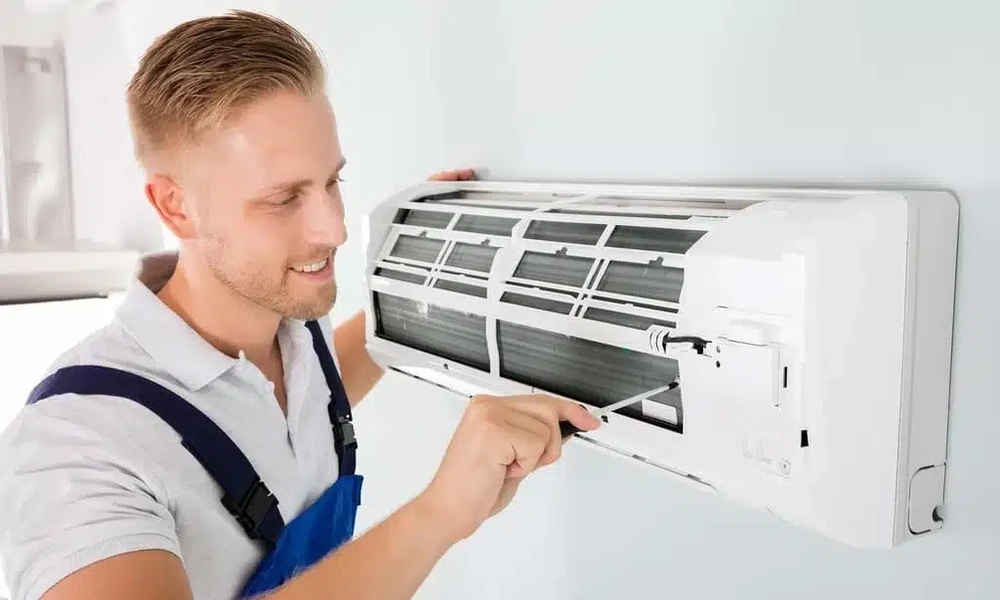
The outdoor condenser and the indoor coil are a team. They are engineered and rated as a matched set, and the efficiency number on a new system only holds true when both halves come from the same tested pairing. The Air Conditioning, Heating and Refrigeration Institute keeps a directory of these certified combinations, and a reputable installer can show you that your outdoor and indoor pieces appear there together.
Putting a new condenser on an old coil is the most common shortcut homeowners are offered to save money. It tends to backfire. The system rarely reaches its advertised efficiency, the mismatch can shorten the compressor’s life, and some manufacturers will limit warranty coverage on unmatched installations. In many Space Coast homes the coil sits inside an air handler in a closet, garage or attic, so the air handler is usually replaced at the same time, bringing a newer blower motor along with it.
Why the Refrigerant Question Matters Now
Older Florida systems ran on R-22, which has been phased out for years. Most units installed over the past decade and a half use R-410A. New residential equipment now ships with lower impact refrigerants such as R-454B or R-32 under federal rules that took effect in recent years.
That shift is one more reason partial replacements have become harder to justify. The new refrigerants run at different pressures and are classified as mildly flammable, so the coil, the outdoor unit and the components handling the refrigerant need to be designed for them. If your current system still uses R-410A, it can be serviced for a long time. Once a major component fails on an older system, though, the practical choice usually becomes a matched new system rather than a patch.
The Supporting Cast Nobody Mentions
Beyond the two big pieces, several smaller items decide whether a new system performs well for fifteen years or struggles from the first summer.
The copper line set carries refrigerant between the indoor and outdoor units. Reusing it can be fine when it is the right size, free of kinks and properly insulated, and when the installer flushes it thoroughly. Lines buried in walls are often kept to avoid tearing into drywall. Lines that are undersized, corroded or wrapped in crumbling insulation should go.
The pad under the outdoor unit gets less attention than it deserves. Many older pads have sunk or tilted, which strains the compressor and the refrigerant connections. Florida also expects outdoor units to be anchored against hurricane winds, so a new condenser should leave with proper tie downs rather than simply resting on concrete.
Electrical parts near the coast take a beating from salt air. Cocoa sits close enough to the Indian River and the ocean that disconnect boxes and wiring whips often show rust well before the unit itself fails. Replacing them during a changeout costs little.
Then there is the condensate system. A Florida air conditioner pulls gallons of water out of indoor air on a humid day, and that water needs a clean drain line, a working trap and, for units above finished ceilings, a secondary pan or a float switch that shuts things down before an overflow stains the drywall below.
What Can Often Stay in Place
A thoughtful replacement does not throw out working parts just because they are old. Depending on condition, these items frequently remain.
- Ductwork that passes a leakage test and has intact insulation, since replacing sound ducts adds cost without adding comfort.
- Supply registers and return grilles, which can simply be cleaned or swapped individually later.
- Thermostat wiring, as long as the new equipment does not require extra conductors for communicating controls.
- The electrical circuit and breaker, provided they match the new unit’s rated requirements.
- A line set buried in finished walls, if testing shows it is sized correctly and holds pressure.
Each of these deserves a quick check rather than an automatic pass.
Getting the Size Right Before Picking a Brand
Many homes in older Brevard neighborhoods were fitted with equipment sized by rule of thumb decades ago. Since then, owners may have added impact windows, a new roof, extra attic insulation or a screen enclosure that shades the back of the house. Any of those changes can mean the house needs less cooling capacity than the old unit provided.
Oversizing is especially costly in a humid climate. A unit that is too large cools the air quickly and shuts off before it has removed enough moisture, leaving rooms cool yet clammy. A proper load calculation, usually done with the ACCA Manual J method, accounts for windows, insulation, orientation and occupants. The University of Florida’s extension service explains this in its fact sheet on home air conditioning, which also covers how humidity removal factors into equipment choices.
Efficiency ratings have changed too. Equipment is now labeled with SEER2, a stricter test than the older SEER figures, and most split systems sold in the Southeast must meet a minimum of roughly 14.3 SEER2. Going higher often brings variable speed operation, which runs longer at lower output and handles moisture noticeably better.
The Paperwork That Travels With the Job
A replacement in Florida generally requires a mechanical permit and a final inspection, and the installer normally handles both. The old refrigerant must be recovered rather than vented. Most manufacturers also expect the new equipment to be registered within a set window, often 60 to 90 days, to unlock their longest parts warranty, so it is worth confirming that registration actually happened.
Seeing the System as a Whole
The honest answer to whether a new air conditioner means replacing everything is no, but it does mean looking at everything. The condenser and coil nearly always move as a pair. The pad, electrical parts and drains usually deserve updating. The ducts, grilles and buried lines can often stay if they earn it. When a quote breaks those decisions down clearly, you can tell the difference between a careful replacement and one that simply swaps the most visible box.